Guides
Tool and Die Shop Websites: What Buyers Check First
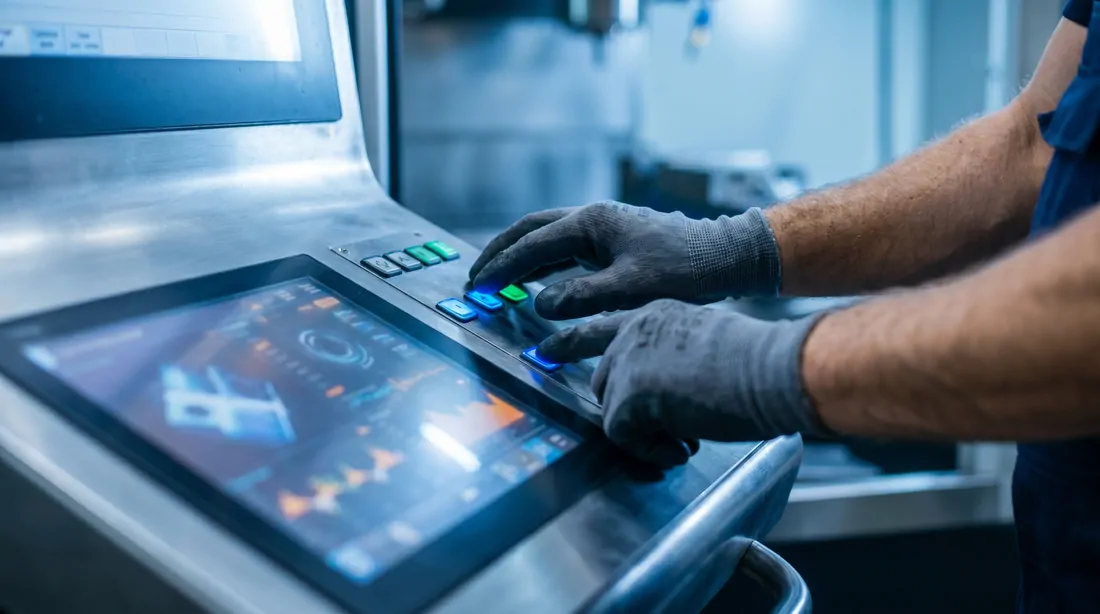
A tooling buyer or program manager opens a tool and die shop website to answer a short list of questions: what kind of tooling you build, how big, whether you can try it out in your own press, what EDM and engineering capacity sits behind it, which materials you have real experience with, and how long a build usually takes. If those answers are on the page in plain numbers, you stay on the bid list. If they are buried in a paragraph about craftsmanship, the buyer moves to the next shop. The layout below puts each answer where a buyer expects to find it.
What does a tooling buyer check first?
Tooling buyers screen fast because picking the wrong builder shows up months later, in tryout. Most check the same things, roughly in this order:
- Type and size. Do you build this kind of tool, at this size?
- Tryout. Can you prove the die out in a press big enough to run it?
- EDM and machining. Do you cut your own punches, sections and electrodes?
- Engineering. Can you design the tool and simulate the forming before steel is cut?
- Materials. Have you built tools for this grade and thickness?
- Service and timing. New build, repair or engineering change, and how long each takes.
Give each its own labeled section so a buyer can check them off without calling.
Which types of tooling do you build, and how big?
Name your die types using the terms buyers search for. The trade uses them consistently:
- Progressive dies. A coil strip feeds through a series of stations, each doing one or more operations, and the part stays attached to a carrier until the last station cuts it free. Pilots entering previously pierced holes keep the strip in register. Progressive tooling is the usual answer for high-volume parts.
- Transfer dies. The part is separated from the strip early and moved between stations mechanically, without a connecting carrier. Transfer work tends toward larger or deep-drawn parts.
- Line dies. A series of dies run in a tandem line of presses, for large parts that cannot be made in a single press.
- Compound dies. Cutting and shaping, or internal and external features, done in a single press stroke.
Then give the size range: maximum die length, width and weight, the strip widths and thicknesses you have built for, and the largest and smallest parts you have tooled. "Progressive dies up to 120 inches long for strip up to 0.250 inch" (with your real numbers) does more work than "dies of all sizes."
If you build molds
Mold makers face the same question with different vocabulary. Say whether you build injection molds, die cast dies, or both, then list cavitation, hot runner or cold runner experience, family molds and maximum mold size and weight. If you build to SPI mold classes, name them. The SPI classifications, from the trade group now called the Plastics Industry Association, describe Class 101 as built for one million or more cycles, Class 103 as under 500,000 cycles and Class 105 as prototype tooling for 500 cycles or less.
Can you try out dies in house?
Buyers ask this early, and the answer belongs in a table. Tryout is where a die is run, adjusted and proven before it ships, and a buyer wants to know whether that happens on your floor or in their production press.
| Spec | Why the buyer asks |
|---|---|
| Tonnage | Confirms the press can form the part, not just close on the die |
| Bed size (left to right and front to back) | Confirms the die physically fits |
| Shut height and stroke | Confirms the die height and draw depth work in your press |
| Cushion | Matters for draw dies that need blank holder pressure |
| Feed setup | Coil feed, strip or hand-fed blanks, and whether you can run transfer tryout |
List each tryout or spotting press on its own row. Tonnage matters more as materials get stronger. WorldAutoSteel's AHSS Insights guide notes that the higher yield strengths and work hardening of advanced high-strength steels "can require as much as four times the working loads of mild steel." A die designed for one of those grades may need much more press than the same shape in mild steel.
If a die outgrows your largest press, say how you handle it, such as tryout in a partner's press or at the customer's plant.
What wire and sinker EDM capacity should you list?
EDM is core to tool and die work, and mold and die makers are its heaviest users. Wire EDM is typically used to make punches, tools and dies from hard metals, and sinker EDM burns cavities with a graphite or copper electrode shaped as the negative of the feature.
For each EDM machine, list:
- Machine type (wire or sinker) and how many you run
- Axis travels and the largest workpiece the tank accepts
- Maximum cutting height for wire
- Taper capability, if you cut die clearance with the wire
- Whether you make your own electrodes
List machining centers and grinders the same way. A machine list is hard to fake, which is why buyers trust it.
How should you describe CAD/CAM and forming simulation?
Describe what your engineering team does, not which software logos you own. Can you take a part model and deliver the die design, strip layout and CAM programs, or must the customer supply the design? Say which file formats you accept for quoting, such as STEP.
If you run forming simulation, explain what it does for the customer. AHSS Insights describes a virtual tryout as one that "evaluates the stamping and die design, and can detail areas of severe forming, buckles" and points out that "addressing problems before costly and time-consuming die construction starts leads to improved quality." That is the benefit in a buyer's terms: fewer surprises in tryout.
Be honest about limits. The same guide cautions that "the virtual forming codes do not accurately predict springback," and any simulation is only as good as the material data fed into it. A line such as "we simulate every draw die and use the results to plan springback compensation, then confirm it in tryout" is believable. "Simulation guarantees first-time-right dies" is not.
How do you state materials experience honestly?
List the grades and thickness ranges you have actually built production tools for, and separate them from materials you are willing to try. Buyers want proof, not optimism.
High-strength steels
Advanced high-strength steels change the die, not just the press. AHSS Insights says work hardening during stamping "may result in additional die wear," and it discusses powder metallurgy tool steels, hard coatings and nitriding as ways to manage it. It also advises completing initial tryout before a die is coated, so die adjustments and springback compensation do not remove the new coating. A short paragraph on how you choose die steels and coatings for this work signals more experience than a list of grade names.
Aluminum
Aluminum brings a different problem. AHSS Insights puts the elastic modulus of many aluminum alloys at about 70 GPa against 210 GPa for steel, and notes that springback is inversely proportional to modulus. A shop that has built aluminum dies and dealt with that springback should say so, with the alloys and part types involved.
Should build and repair be separate pages?
Yes. New die builds and repair work are bought by different people under different pressure. A program manager sourcing tooling for a new part has weeks to compare quotes. A plant maintenance manager with a broken die and a stopped press needs to know today whether you take emergency work.
Give each service its own section or page:
- New builds: die types, size range, design and tryout process
- Engineering changes: modifying an existing die for a revised part, including dies you did not build
- Repair: broken sections, punches and components, with how to reach you for urgent work
- Maintenance: scheduled sharpening and preventive maintenance programs
- Design only or tryout only: if you sell engineering or press time on its own
Each is a separate search. A maintenance manager types "stamping die repair" plus a city, so a dedicated repair page helps you show up for it.
How should you state lead times?
State them as typical ranges, by service, from a defined starting point. A range tells a buyer whether you fit their launch date. A format like "most new progressive dies ship X to Y weeks after design approval" works, with your real numbers. Say what the clock starts on (purchase order, data release or design approval), because that is where schedule disputes start. Give repair turnaround separately, and say plainly that complex or rush jobs are quoted individually.
What photos should a tool and die website show?
Show your own tools. Experienced buyers spot stock photos instantly. The most useful shots are:
- Finished dies open on the bench, showing size and construction
- Dies set in your tryout press, which also proves the press exists
- Strip samples from progressive dies, station by station
- Finished parts next to the tool that made them
- Your EDM, machining and inspection areas
Caption each with die type, part, material, thickness and approximate die size. Many tooling jobs fall under confidentiality agreements, so get permission before posting a customer's part, and blur part numbers and logos when in doubt.
Which industries should you list?
Only the ones you have built tooling for, such as automotive, appliance, electrical or agricultural equipment, with a sentence on what each demanded. A short list of real industries beats a long one copied from a competitor.
How should the site be laid out?
Put die types, size range and tryout tonnage on the home page's first screen. Then give buyers a page per tooling type, a tryout and press table, the EDM and machine list, engineering, repair and engineering changes, industries with a captioned gallery, and an RFQ form that accepts part models and drawings.
For the broader rules on writing equipment and tolerance sections, see our guide to writing a manufacturing capabilities page. Our article on how to get more RFQs covers the quote form itself, and our metal fabrication website design page is the next stop for metalforming shops. Exhibit Domain plans are $99, $199 and $499 a month billed annually. Monthly-only billing costs 25 percent more and cancels any time, and annual plans carry a 7-day refund window. Hosting and SSL are included. See our pricing page, or request a quote for a custom project.
Frequently asked questions
What should a tool and die shop put on its website?
The die or mold types you build and their size range, your tryout press specs (tonnage, bed size, shut height), your wire and sinker EDM capacity, your engineering and simulation capability, the materials you have built tooling for, typical lead time ranges, real photos of your tools and parts, and the industries you serve. Put new builds and repair work in separate sections.
Why do tooling buyers ask about tryout press capacity?
Tryout is where a die is run, adjusted and proven before it ships. A buyer wants to know whether that happens in your press or theirs. Tonnage and bed size show whether your press can actually run the die, which matters more with high-strength steels that WorldAutoSteel's AHSS Insights guide says can require as much as four times the working loads of mild steel.
Should a tool and die shop list its EDM machines?
Yes. EDM is central to tool and die work, and buyers want to know whether you cut punches, die sections and electrodes in house. For each wire or sinker EDM, list the machine count, axis travels, largest workpiece and maximum cutting height.
How should a die shop show lead times on its website?
Give typical ranges by service, such as new progressive dies, transfer dies and repairs, and say what the clock starts on: purchase order, data release or design approval. Note that complex and rush jobs are quoted individually so the range is read as a guide, not a promise.
Want a site that does this out of the box?
We build it in as standard, from $99/mo. No contracts.