Guides
Metal Finishing Websites: What Engineers Check Before Sending Parts
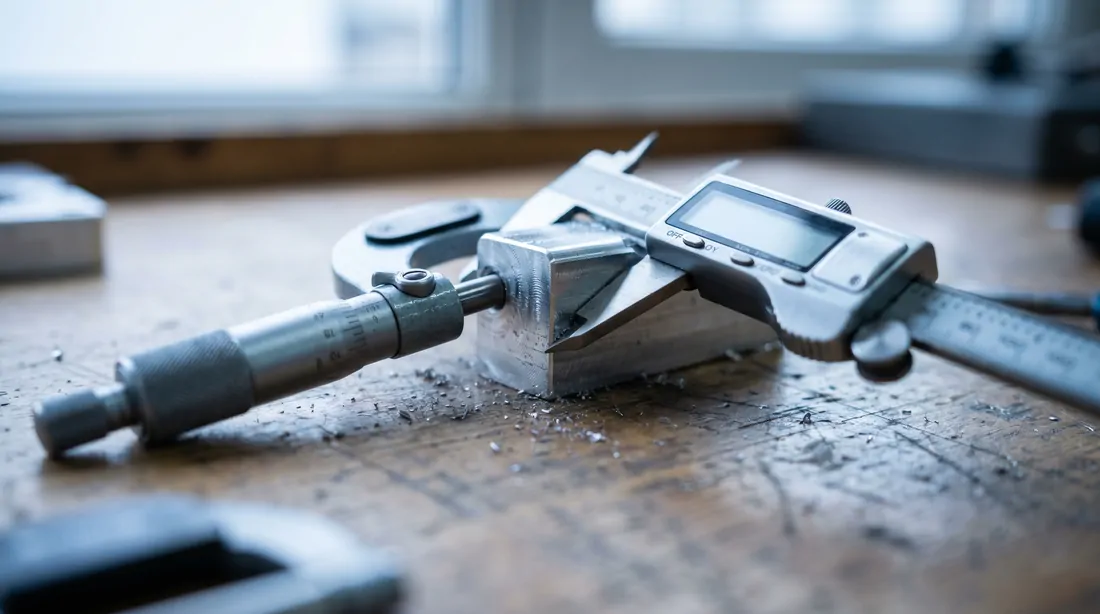
Engineers send parts to a finisher whose website proves three things fast: you process to the exact specification on their drawing, their part fits your tanks, and you can document the job the way their quality department needs. A metal finishing website wins work by listing every process by specification number with its types and classes, publishing usable part dimensions and weight limits, naming the substrates you run, and showing your certifications, certs of conformance, and test reports. Add realistic turnaround ranges and a quote form that asks for the spec, alloy, quantity and drawing. Give each process its own page so the engineer who searches "MIL-PRF-8625 Type III" lands on the page that answers that question.
What does an engineer check on a finisher's website?
A design or supplier quality engineer has a drawing with a finish note and a short list of shops. Before calling, they want answers to these questions:
- Specification: Do you run the spec, type and class on my drawing?
- Size and weight: Will my part fit your line, and can you rack or hang it?
- Substrate: Do you process my alloy?
- Masking: Can you keep finish off my threads, bores and contact surfaces?
- Proof: Which certifications and accreditations do you hold, and what paperwork ships with the parts?
- Time and next step: How long does it usually take, and how do I get a quote?
Many finishing websites answer the first with one word ("Anodizing") and skip the rest. Every gap is a phone call the engineer may not make.
Why should a finishing shop list processes by specification number?
Because that is how the finish is ordered. A drawing note does not say "anodize it." It names a specification, a type and a class, and the engineer searches for exactly that string. A page that says "MIL-PRF-8625 Type II, Class 2 (dyed)" matches the drawing word for word. A page that says "decorative and hard anodizing" makes the engineer guess.
Here is how the common specifications break down, and what each process page should state. Verify every spec you list against your own approvals and the copy in your quality system before it goes on the site.
| Process | Specification | What to list on the page |
|---|---|---|
| Anodizing (aluminum) | MIL-PRF-8625 (formerly MIL-A-8625) | Which of the six types you run: I and IB (chromic acid), IC (non-chromic), II (sulfuric acid), IIB (thin sulfuric), III (hard coat). Class 1 non-dyed or Class 2 dyed, and the colors you offer. |
| Chemical conversion coating (chem film) | MIL-DTL-5541 (formerly MIL-C-5541) | Type I (contains hexavalent chromium) or Type II (no hexavalent chromium). Class 1A for maximum corrosion protection, Class 3 where low electrical resistance is required. |
| Passivation (stainless steel) | ASTM A967/A967M, AMS 2700 | The treatments you run (nitric acid, citric acid) and which verification tests you perform. |
| Zinc electroplating (iron and steel) | ASTM B633 | Thickness classes and supplementary finishes you offer. |
| Electroless nickel | AMS 2404 | Substrates you plate and the deposit thickness range you hold. |
Write the callout the way it appears on drawings
Use the full designation, then the type and class, in the same order a drawing uses. Include the older designation in parentheses. The anodizing spec many engineers still call MIL-A-8625 was redesignated MIL-PRF-8625, and the chem film spec was MIL-C-5541 before it became MIL-DTL-5541. Older drawings still carry the old names, and those engineers search for them too.
A few details in the specs themselves belong on your pages because they settle real questions. ASTM B633 provides four standard thickness classes and states that high strength steels with a tensile strength greater than 1700 MPa (247 ksi, 46 HRC) should not be zinc electroplated under that specification. ASTM A967 names seven alternative verification tests, from water immersion and high humidity to salt spray and copper sulfate. If you say which ones you run, the engineer does not have to ask.
Do not list what you cannot certify
A long list of specs you ran once, years ago, does more harm than a short accurate one. An auditor who finds a spec on your website that is not in your procedures has found a credibility problem. List what you run today.
How big a part can you run, and how heavy?
Engineers with long extrusions or heavy weldments check this first. Tank dimensions alone are not enough. A 12-foot tank does not take a 12-foot part once you account for racking, agitation and clearance.
State, per line or per process:
- Maximum part envelope: length, width and depth you can actually process, not the inside dimensions of the tank.
- Maximum weight: per part and per rack or hoist load.
- Rack or barrel: if you barrel plate small parts such as fasteners, and the smallest part you can rack.
- Lot charges: if you have a minimum lot charge, say so plainly.
A simple table per process (process, max length, max width, max depth, max weight) is one of the most useful things you can publish, and exactly the kind of specific fact an AI assistant can quote.
Which substrates do you handle?
Several specs limit themselves by substrate in their titles. MIL-PRF-8625 covers anodic coatings on aluminum and aluminum alloys. MIL-DTL-5541 covers conversion coatings on aluminum and aluminum alloys. ASTM A967 covers passivation of stainless steel parts. ASTM B633 covers zinc on iron and steel. Each process page should name the alloys you run and any you turn away, such as the high strength steels B633 excludes. A short "we do not process" line saves both of you a wasted quote.
Can you mask and plate selectively?
Threaded holes, bearing bores and grounding points need finish kept off them, and the engineer wants proof you have done it before. Show it:
- The masking methods you use: plugs, caps, tape, lacquer or wax, and which processes each works with.
- Photos of masked parts before and after processing, with customer details removed.
- How you want masking called out on the drawing or PO, and if you charge per feature.
- Selective plating or touch-up capability if you have it.
Which certifications and accreditations should a finisher show?
Show the ones you hold, in text, with the scope written out. For most finishers that means ISO 9001, and for aerospace work AS9100, which BSI describes as based on ISO 9001 while addressing the regulatory, safety and reliability requirements of aerospace, including civil aviation, space and defense.
For aerospace finishers the one engineers look for is Nadcap Chemical Processing. Nadcap is an industry-managed accreditation program for critical processes, run with the Performance Review Institute (PRI), and Chemical Processing is one of its core accreditation areas. Nadcap certificates state that they cover specific services as listed on PRI's Qualified Manufacturers List. In other words, accreditation is process by process. Say which processes are inside your Nadcap scope, and do not let the logo imply more.
Customer or prime approvals belong here too, but only where the customer allows you to say so. Our guide on how to display ISO 9001 and other certifications covers placement, certificate PDFs and expiration dates in detail.
What documentation ships with the parts?
Quality departments buy paperwork along with the finish. Your website should show exactly what arrives with the job:
- Certificate of conformance: list what yours includes, such as PO number, part number, quantity, specification with type and class, lot or job number, and an authorized signature. A redacted sample is the best proof.
- Thickness readings: how you measure and report coating thickness. For Type III hard coat, MIL-PRF-8625 calls for eddy current or metallurgical cross section.
- Test reports: salt spray, adhesion, passivation verification or other tests, and which ones you run in-house versus at an outside lab.
How should you state turnaround times?
As typical ranges by process, in business days from receipt of parts, with a clear note on what lengthens them. Masking, strip and refinish, unusual colors and outside lab testing all add time, and engineers respect a shop that says so. If you offer expedite service, say how to request it and what it costs. Skip vague "fast turnaround" claims. Engineers plan schedules around your number, so give one you hit most weeks.
What should a quote request form ask for?
Ask for everything you need to quote once, and nothing you do not. A good finishing RFQ form includes:
- Specification, type and class exactly as on the drawing.
- Base material and alloy (and temper or hardness where it matters).
- Quantity per lot and expected order frequency.
- Part dimensions and weight.
- Drawing upload (PDF), plus a STEP file if they have one.
- Masking requirements and thickness or color callouts.
- Certs and test reports required.
- Need-by date and ship-to location.
Keep the required fields short (name, company, email, spec, quantity, file) and leave the rest optional.
Why build one page per process instead of one long list?
Because engineers search one process at a time. Someone searching "Type III hard anodizing" and someone searching "ASTM A967 citric passivation" are different buyers with different parts, and a single services page cannot be the best answer for both. Each process page should carry the specs, types and classes, substrates, part size limits, masking notes, documentation, typical turnaround and a quote button that pre-fills the process.
Search engines and AI assistants both favor a page that answers one question completely, with specific numbers. Our guide on writing a manufacturing capabilities page shows how to structure each one.
How much should you say about environmental compliance?
Enough to show you run a permitted, controlled operation, without making claims you cannot back up. Finishing is a regulated business. The EPA's Metal Finishing Effluent Guidelines (40 CFR Part 433) cover wastewater from plants that do electroplating, electroless plating, anodizing and coating such as chromating and phosphating. Hard chromium plating, decorative chromium plating and chromium anodizing tanks also fall under an EPA air rule, the Chromium Electroplating NESHAP (40 CFR Part 63 Subpart N).
A short paragraph stating that you operate under the applicable permits, plus any options that avoid hexavalent chromium (MIL-DTL-5541 Type II and the non-chromate anodize types in MIL-PRF-8625, if you run them), answers the question many buyers now ask. Do not claim to be "green" or "zero discharge" unless you can document it.
If you also run paint or powder lines, our powder coating website design page covers how finishing shops organize those services alongside plating and anodizing. Exhibit Domain plans are $99, $199 and $499 a month billed annually. Monthly-only billing costs 25 percent more and cancels any time, and annual plans carry a 7-day refund window. Hosting and SSL are included. See our pricing page, or request a quote for a custom project.
Frequently asked questions
Should a plating or anodizing website list specification numbers?
Yes. Engineers order finishes by specification, type and class, and they search for those exact strings. List each spec you run under your current procedures, such as MIL-PRF-8625 Type III or MIL-DTL-5541 Type II Class 3, and include older designations like MIL-A-8625 and MIL-C-5541 because many drawings still use them.
What is the difference between MIL-A-8625 and MIL-PRF-8625?
They are the same anodizing specification under different designations. MIL-A-8625 was redesignated MIL-PRF-8625, a performance specification, and industry coverage of the change notes it did not fundamentally change how anodizing is performed. The spec covers six types (I, IB, IC, II, IIB and III) and two classes (Class 1 non-dyed and Class 2 dyed) of anodic coatings on aluminum and aluminum alloys.
Does Nadcap accreditation cover every process a finisher runs?
No. Nadcap Chemical Processing certificates cover specific services as listed on PRI's Qualified Manufacturers List, so accreditation is granted process by process. A finisher's website should state which processes are inside its Nadcap scope rather than showing the logo as if it applied to everything.
What should a metal finishing quote request include?
The specification with type and class, the base material and alloy, quantity per lot, part size and weight, a drawing or STEP file, masking and thickness or color callouts, the certs and test reports required, and the need-by date. Make only the essentials required so engineers can submit quickly.
Want a site that does this out of the box?
We build it in as standard, from $99/mo. No contracts.